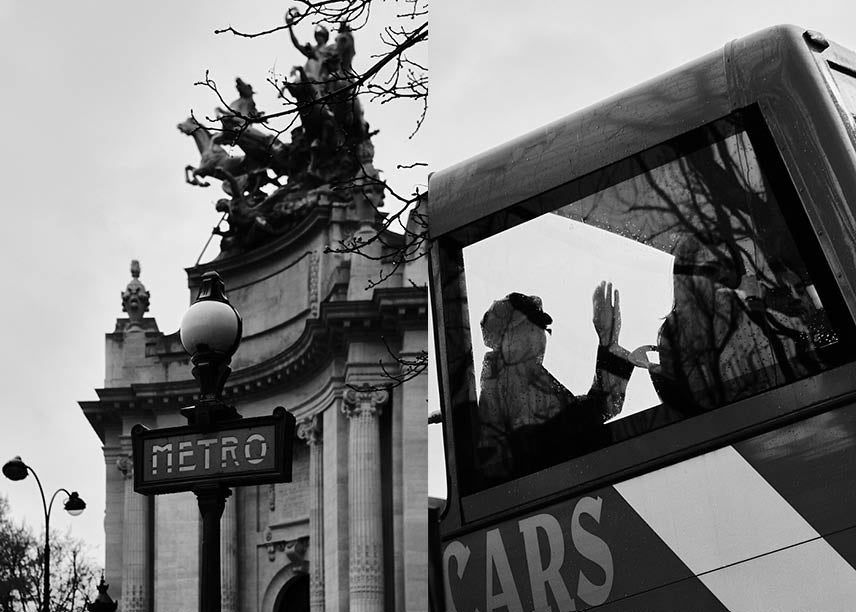
PARIS 2007 - Forme d'une Ville
PARIS 2007 - Forme d'une Ville
Couldn't load pickup availability
"Citizens, the nineteenth century is great, but the twentieth century will be happy."
— Victor Hugo, "Les Misérables", trans. Charles E. Wilbour
The city built in pursuit of happiness — whom does it make happy now?
In the time of Les Misérables, nineteenth-century Paris was, by all accounts, the center of revolution, poverty, riot, state power, and urban reconstruction. People rose in pursuit of liberty, equality, and happiness. But the twentieth century that followed — was it truly a century of happiness? War, occupation, the end of colonialism, immigration, capitalism, the city turned to tourism, the troubles of the suburbs, terror, division. Even now, well into the twenty-first century, Paris remains there, still carrying the weight of what the twentieth century left behind.
In my twenties, Paris held its own particular place in my life. I walked its streets without rest, and I regret now that I did not take more photographs. 2007 was the last time I went. Paris then, bearing the revolution of the nineteenth century and the hope of the twentieth, still kept the form of an older city in its wet pavements, its cafés, its newspaper stands. It has been a long time since I last set foot there. Nineteen years on, what kind of city has Paris become? I hear its streets have been made more beautiful — but has it become safer? Wealthier? More livable? Or has the city once promised happiness simply taken on a different unease?
I think about what it means to edit, nineteen years later, the photographs I took then. The nineteen years that lie heavily between the young photographer and the older editor leave no mark on the city that was their subject. The me of that time was naive about social questions and saw only the surface structure of the city. Shots driven by inspiration alone, looking as if they meant something but with no necessity of place or time — the contact sheets were full of them. While selecting, I am often seized by the urge to go back and shoot again. But the Paris of that time is no longer within reach. What remains is only this single body of photographs, where the present and the past are layered into one.
In the middle of processing the files, my thoughts drift to the city I now live in — to Tokyo, and to how its city-making is done. In every country, people try to make the cities they inhabit better. They mount revolutions, build institutions, lay roads, tear down buildings, open plazas, welcome migrants, draw tourists, keep the economy moving. And yet the city always betrays those intentions, with disarming ease. A city built for happiness pushes someone else out. Streets opened in the name of freedom become places of surveillance and unease. A city polished in pursuit of wealth keeps its residents away the more its value rises. And still, people see daybreak in the structure of the city.
This work is a record meant to ask where the human will to make cities better has finally drifted — a question pressed into form. It was made as the second volume of the documentary monochrome series that began with SHIBUYA 2025 — Ashen Reincarnation.
Share